

Problem
Students won’t hand a career decision to a black box
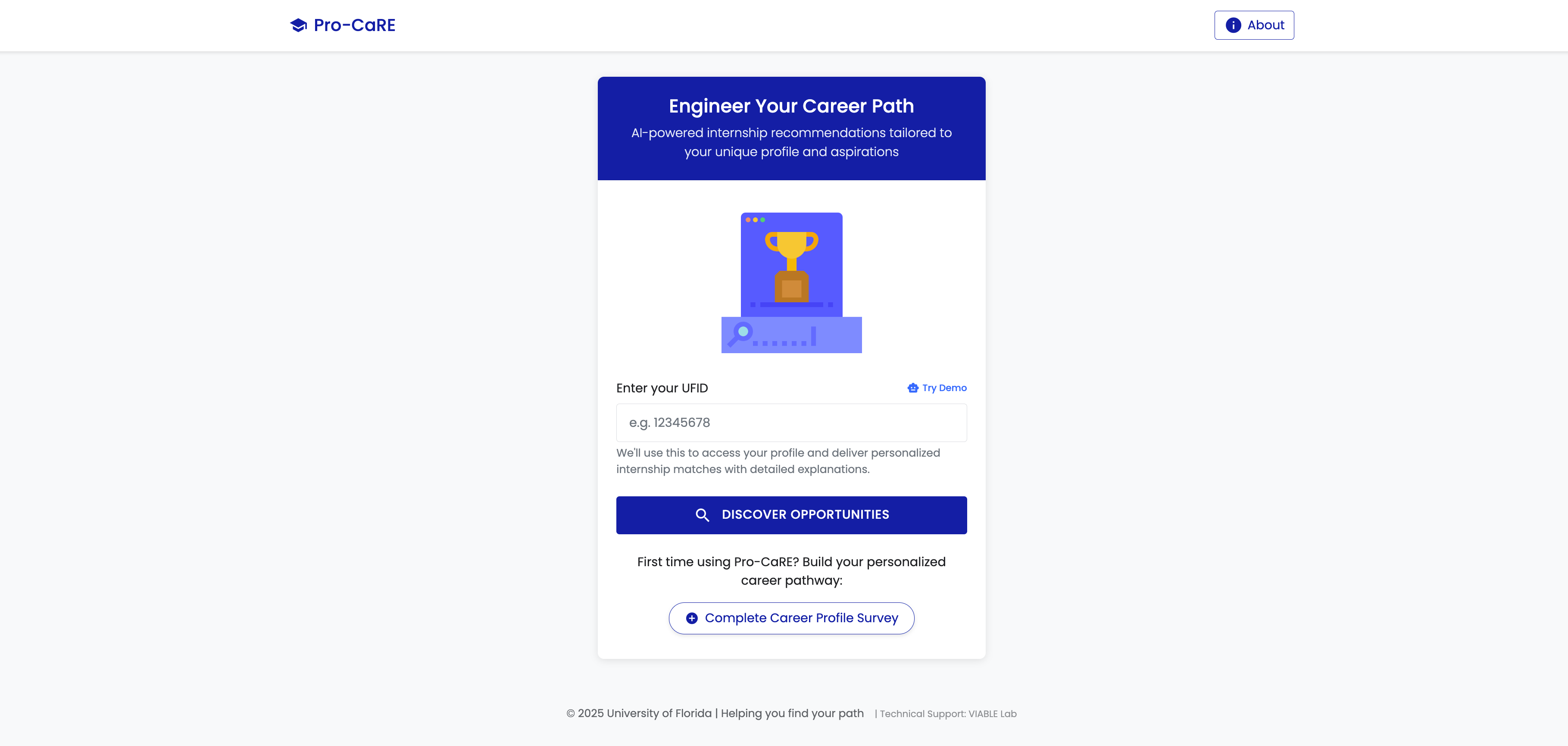
Internships and co-ops shape engineering careers, but advising is uneven and postings churn every week. A recommender could help, but only if it optimizes for the right thing and students can question it.
Approach
Ask students what they grew from, then describe every job by its tasks
- Measure growth, not clicks223 students reported their tasks, technical and professional learning, and four facets of engineering self-efficacy: confidence, leadership, identity, and commitment.
- Turn postings into tasksAn LLM broke internship postings into 1,913 concrete tasks. People labeled them, and fine-tuned BERT-family models sorted them into 15 categories.
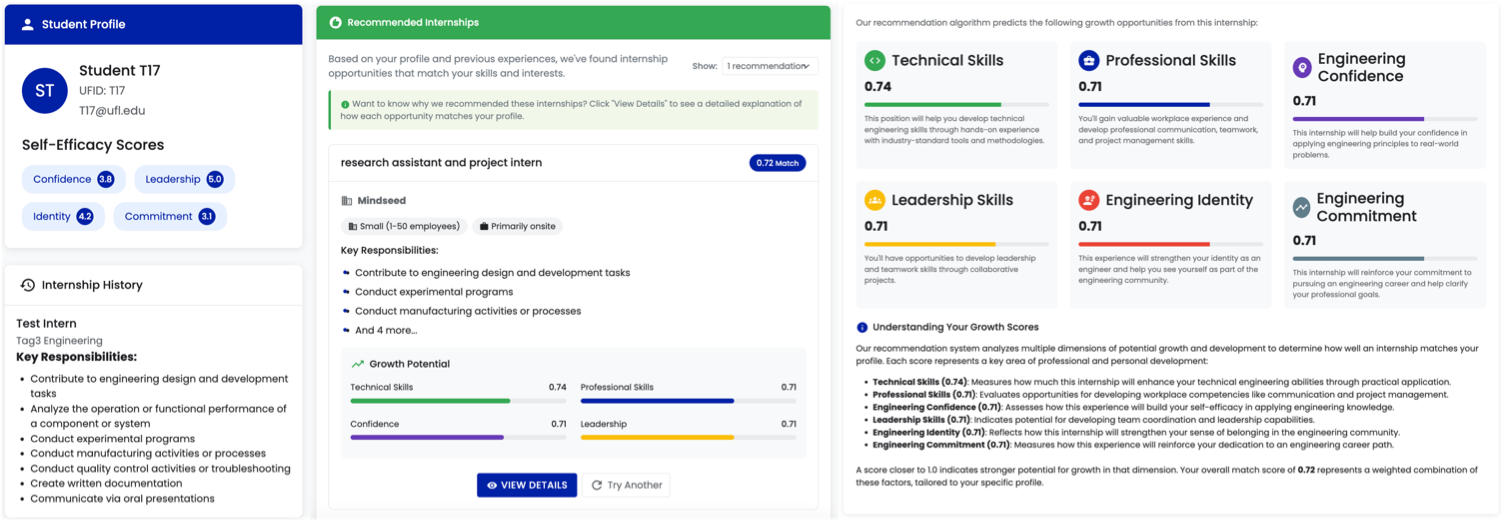
- Recommend on predicted growthA hybrid recommender predicts each student’s growth for each opportunity. New postings work immediately, before anyone has rated them.
- Explain every recommendationThree kinds of explanation: why this one, which features mattered most, and examples of similar students.
Findings
What students actually do in internships
223students surveyed
1,913tasks extracted from postings
R² > .72across six outcomes, held-out students
Next
The question that decides adoption: do students trust it?
The explanation study is under way: interviews with students about whether each kind of explanation helps them judge a recommendation and decide whether to act on it.
if I ran it again
The sample covers two majors at one university, and learning outcomes are self-reported. So far the evaluation is predictive accuracy. The user-facing question, whether explanations change trust and choices, is the part I most want to answer.