

Problem
Creativity matters, and it is expensive to measure
The gold standard for judging creative work is a panel of trained raters scoring each artifact. That does not scale to a classroom, let alone a game with thousands of players.
Physics Playground lets students design their own levels: ramps, pendulums, and a ball that has to reach a balloon. Each level is a real creative artifact. Could an LLM rate them the way experts do, inside the game, without stopping play for a test?
Six levels students drew. Rate each one the way the expert raters did, then compare.
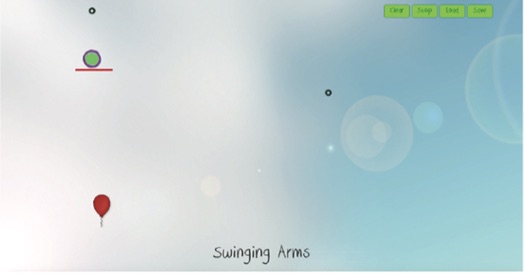
Swing Arms
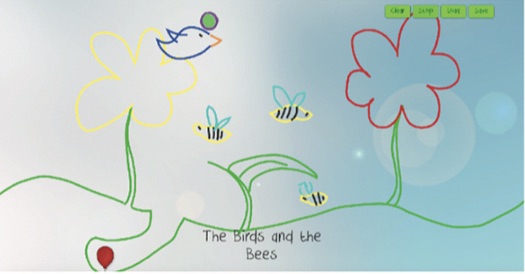
The Birds and the Bees
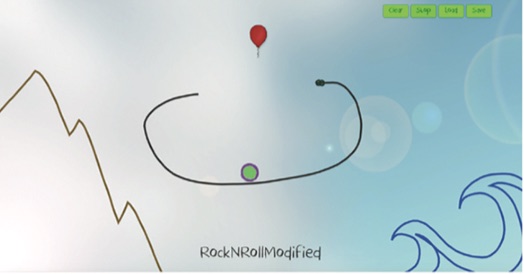
RockNRoll
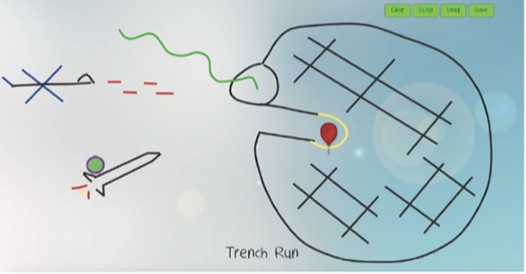
Trench Run
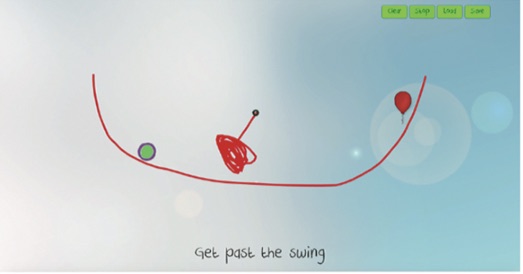
Get Past the Swing
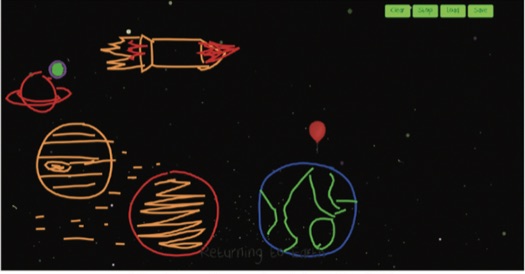
Returning to Earth
Approach
Hold everything constant except what the judge sees
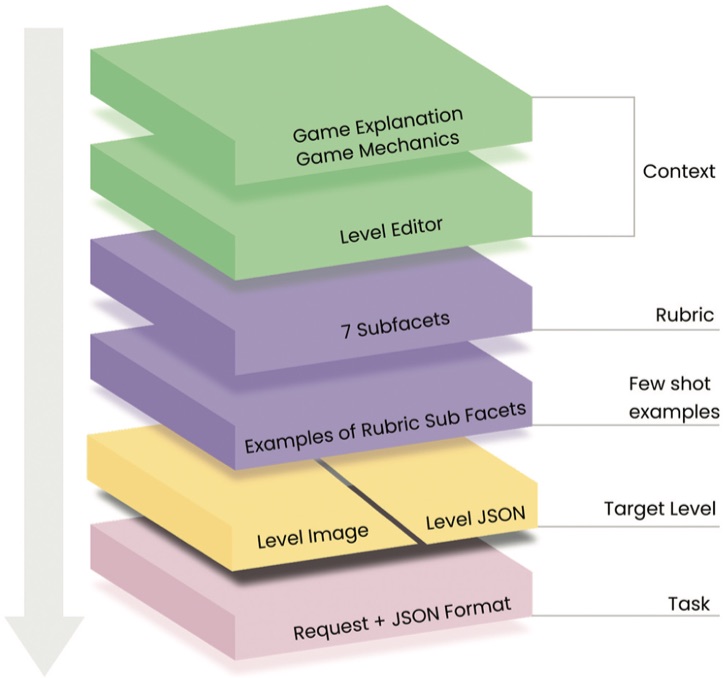
- Real artifacts421 levels designed by college students, each saved as an image and as structured level data.
- Expert ground truthTwo experts rated every level on a seven-part rubric: originality, elaboration of lines and objects, aesthetics, humor and surprise, title creativity, and whether it can be solved.
- Controlled promptsThe same models scored the same levels with and without the rubric, from the image, the data, or both.
- Validity and reliabilitySpearman correlations with bootstrapped confidence intervals, one model call against the average of three, and large against small models across the GPT and Gemini families.
Findings
Structure and sight made the AI judge credible
- The picture mattersWithout the image, the model missed aesthetics and humor. Creativity in a visual artifact cannot be read from data alone.
- Some criteria resist automationTitle creativity agreed only at about ρ = .35. Wit in a name is still hard for a model to judge.
Impact
A recipe for any AI judge
The result makes it practical to assess creativity unobtrusively inside learning games. It also generalizes: if you use an LLM as a judge, give it the rubric your human raters use, give it the same inputs they see, and measure agreement before you trust it.
The scoring tool is still online at creativity.viablelab.org; the game editor it embedded went dark when the partner server was retired, so new levels can no longer be built inside it.
The ratings came from two experts and one population of college students. The next question is fairness: does the AI judge score different creative styles and student groups the way human raters do? I would also study whether students accept AI feedback on their creativity, which is a different question from whether it agrees with experts.